


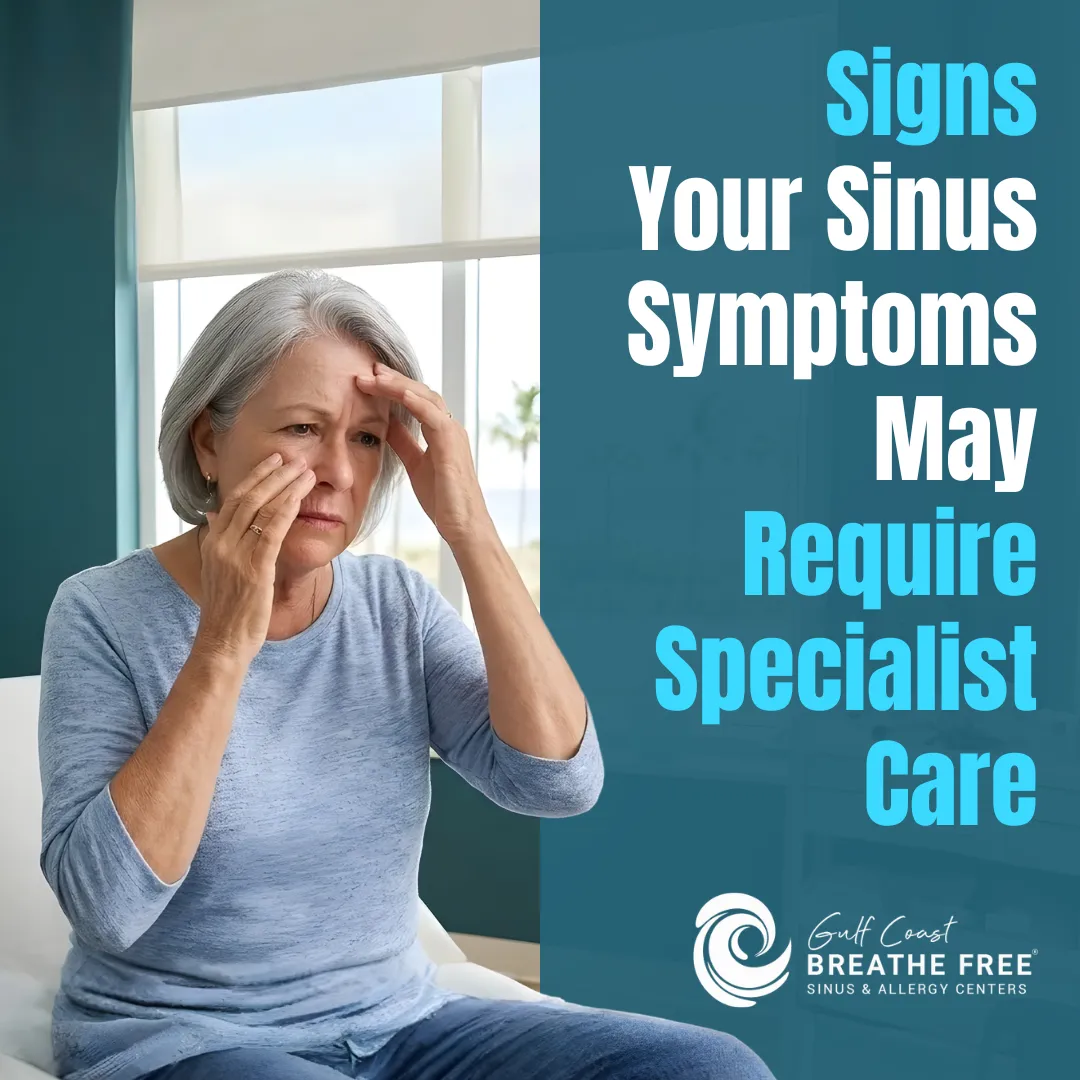
Signs Your Sinus Symptoms May Require Specialist Care
A stuffy nose, facial pressure, or postnasal drip does not always mean it is time to see a specialist. Many sinus symptoms come with a common cold, seasonal allergies, or a short-term illness that improves on its own. In many cases, rest, fluids, saline rinses, and time are enough to help the body recover.
Still, not every sinus problem follows that pattern. Some symptoms last longer than expected. Others improve for a few days, then come back worse. Some people feel like they are dealing with the same sinus trouble over and over again without ever getting a real answer. When that happens, it may be a sign that the problem needs a closer look.
For many patients, the hard part is knowing when to stop waiting and when to seek more focused care. That is where paying attention to the pattern of your symptoms can help.
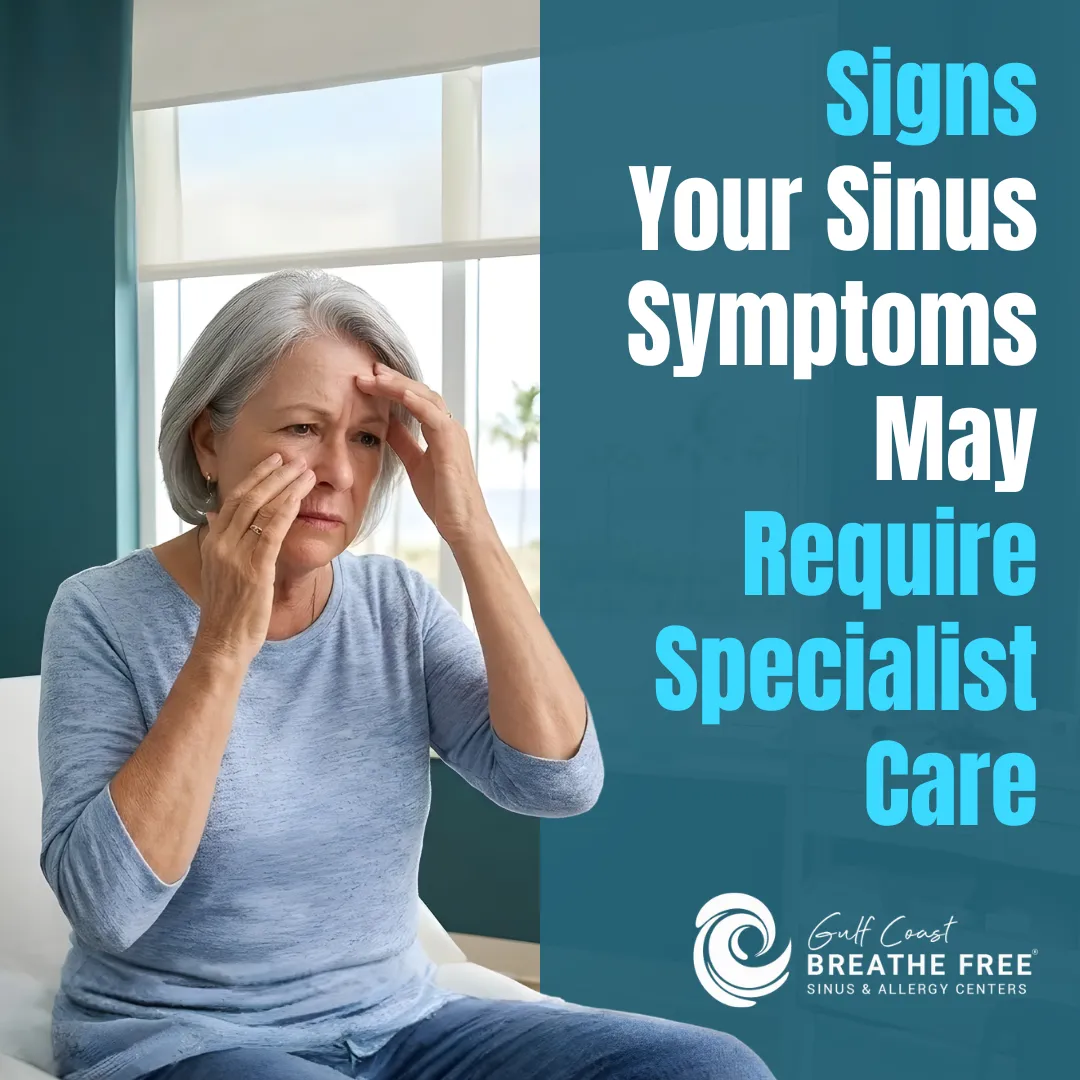
When Symptoms Last Longer Than Expected
One of the clearest signs that specialist care may be needed is how long your symptoms have been going on. A typical cold may cause nasal congestion, drainage, coughing, and pressure for several days, but those symptoms usually improve with time. If your sinus symptoms have lasted more than 10 days without getting better, it may be time to take them more seriously.
Long-lasting congestion can point to more than a basic viral illness. Ongoing pressure, thick drainage, and a blocked nose may suggest that inflammation is not settling down the way it should. That does not always mean the problem is serious, but it does mean it may deserve more than watchful waiting.
If you feel like your symptoms have simply stalled and are no longer improving, that alone can be a reason to seek a specialist evaluation.
When Symptoms Keep Coming Back
Another sign to pay attention to is recurrence. Some people feel like they are constantly getting “another sinus infection,” only to recover briefly before the next round of symptoms starts. When that happens repeatedly, it may suggest there is an underlying issue that has not been fully addressed.
Recurring sinus symptoms can sometimes be linked to chronic inflammation, allergies, nasal swelling, or structural blockage inside the nose. In other words, the problem may not be a series of unrelated illnesses. It may be one ongoing issue showing up in cycles.
If you have had several sinus flare-ups over the course of a year, it may be time to stop treating each one as a one-time problem and look more closely at the bigger picture.
When Symptoms Improve, Then Get Worse Again
Many patients assume that any return of symptoms is just bad luck, but the pattern matters. If your sinus symptoms seemed to improve and then suddenly got worse again, that may be a sign that the issue is not resolving normally.
For example, you may start with congestion and drainage, begin to feel better after a few days, and then develop stronger facial pressure, thicker mucus, or more severe discomfort. That kind of back-and-forth pattern can be a sign that the condition needs medical attention instead of more waiting.
A specialist can help determine whether the return of symptoms points to infection, persistent inflammation, or another cause that needs a more targeted approach.
When Facial Pain or Pressure Becomes More Severe
Mild sinus pressure is common during colds and allergy flare-ups. But when pain becomes stronger, more focused, or harder to ignore, it may be time to seek further care.
Severe facial pressure, pain around the eyes, forehead pain, or headaches that feel tied to the sinuses should not be brushed aside, especially when they last for days or interfere with normal activity. While not every headache is caused by the sinuses, persistent pain in these areas may point to a problem that needs proper evaluation.
When symptoms begin to affect sleep, concentration, or everyday comfort, that is often a sign that simple home care may no longer be enough.
When Symptoms Last for Weeks or Months
There is also a difference between a short-term sinus problem and one that becomes part of daily life. If congestion, pressure, drainage, or smell changes have lasted for 12 weeks or longer, the issue may fall into the category of chronic sinusitis.
This matters because chronic sinus problems are usually not approached the same way as a short-term illness. Long-lasting symptoms may be linked to chronic inflammation, nasal polyps, allergy overlap, or structural issues that prevent proper drainage.
If your symptoms have been hanging on for months, even if they rise and fall in intensity, that is a strong sign that a specialist evaluation may help uncover what is really going on.
When Allergies May Be Part of the Problem
Not every sinus complaint starts with infection. In many patients, allergies play a major role in ongoing congestion, drainage, and swelling inside the nose. If your symptoms flare during certain seasons, after dust exposure, or around other common triggers, allergies may be part of the reason the problem keeps returning.
This overlap matters because symptoms can look very similar on the surface. A patient may think they are dealing with repeat sinus infections when the bigger issue is untreated allergy-related inflammation. If the cause is not identified correctly, treatment may only bring temporary relief.
That is one reason specialist care can be helpful. A closer evaluation can look at whether the symptoms appear sinus-related, allergy-related, or a combination of both.
When Warning Signs Should Not Be Ignored
Some sinus symptoms deserve prompt attention rather than routine follow-up. Swelling around the eyes, changes in vision, facial swelling, shortness of breath, or severe pain should never be ignored. These symptoms go beyond typical sinus discomfort and may point to a more urgent problem.
Even though these cases are less common, it is important for patients to know that not all sinus symptoms are minor. When swelling or pain seems unusual or more intense than expected, it is better to seek care sooner rather than wait it out.
Signs It May Be Time to See a Specialist
Here are some common signs that sinus symptoms may require specialist care:
- symptoms lasting more than 10 days without improvement
- symptoms that improve, then get worse again
- repeated sinus infections over the year
- severe facial pressure or headaches
- ongoing congestion, drainage, or smell changes
- symptoms lasting 12 weeks or longer
- swelling around the eyes or facial swelling
- vision changes or more serious discomfort
Schedule an Appointment with Gulf Coast Breathe Free Sinus & Allergy Centers
Lingering sinus symptoms can wear you down, especially when they keep interrupting your sleep, comfort, and routine. If you have been dealing with congestion, pressure, drainage, or repeat sinus issues and still do not feel like you have clear answers, it may be time for a closer look. Schedule an appointment with Gulf Coast Breathe Free Sinus & Allergy Centers to talk through your symptoms and learn what kind of care may help you move forward.