


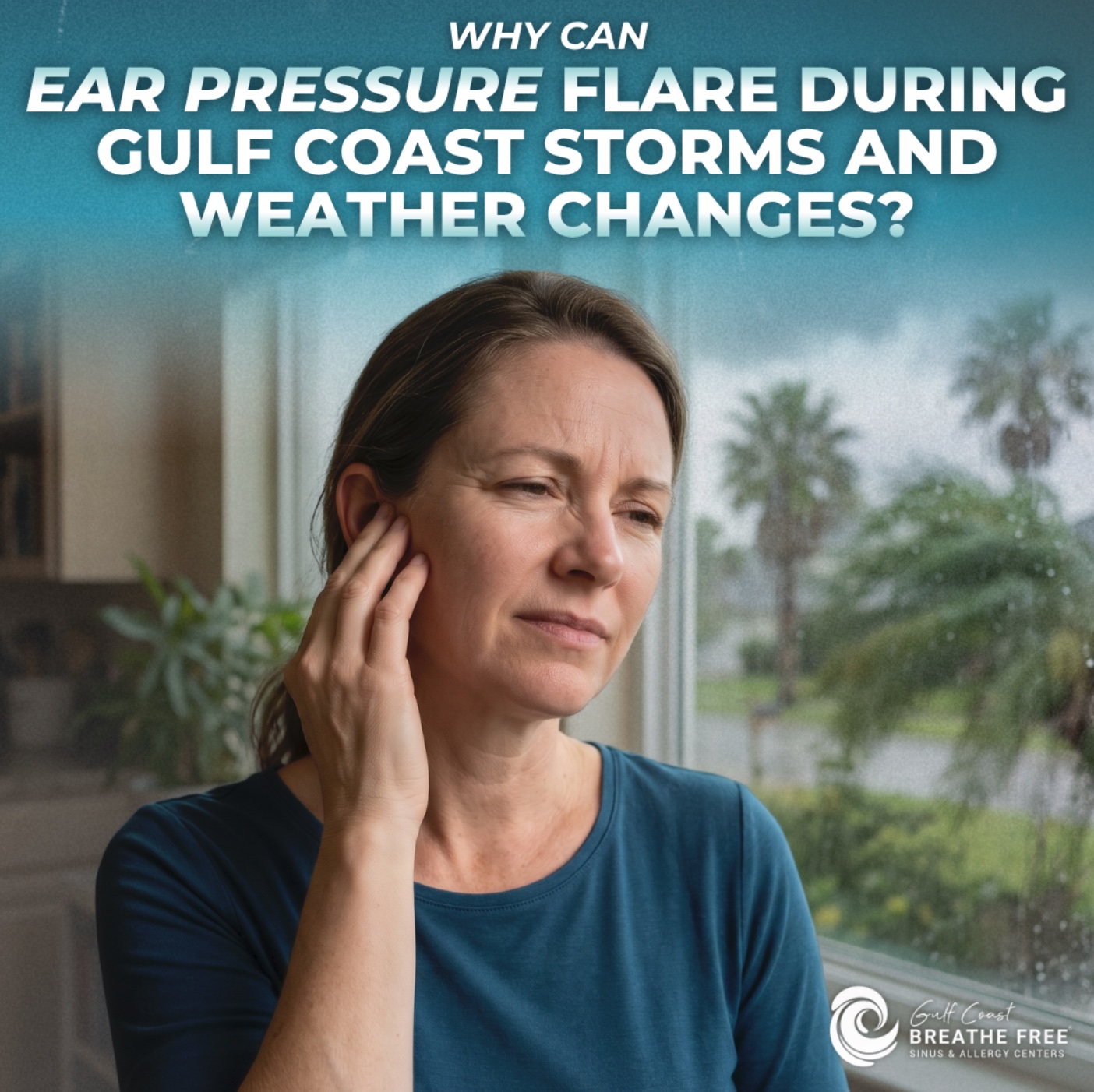
Why Can Ear Pressure Flare During Gulf Coast Storms and Weather Changes?
Living on the Gulf Coast means acquainting yourself with frequent weather changes, sudden thunderstorms and tropical storms, humid days, and cold fronts, among others. While these are all relatively normal, some people may notice an uncomfortable feeling of pressure, fullness, or discomfort when these weather changes occur.
These reactions are often linked to seasonal and weather changes that may affect ear pressure. For some people, these issues are temporary and may resolve on their own with time and without medical intervention. However, for others, ear pressure and discomfort may persist, recur, or significantly impact day-to-day routines, work, productivity, sleep, and comfort, especially during certain weather conditions.
There are several possible underlying causes and contributing factors associated with ear pressure flares during weather changes in the Gulf Coast region.
Our team here at Gulf Coast Breathe Free can help patients in Pensacola, FL, understand what might be causing ear pressure flares during Gulf Coast storms and weather changes.
Understanding How the Ear Regulates Pressure
The eustachian tube is a narrow passage that connects the middle ear to the back of the throat. There is one narrow passage on each side of the head, and it remains closed for the most part and briefly opens during yawning, chewing, or swallowing. When this tube opens, it allows air to move in and out of the middle ear, which helps equalize air pressure and drain fluid.
Sometimes, these narrow tubes can become inflamed and clogged. When they do not open properly as they should, fluid can build up, and pressure differences may develop in the middle ear. This may cause a sensation of fullness or pressure in the ear, muffled hearing, or popping and clicking sensations.
How Can Weather Changes Affect Ear Pressure?
Weather changes common throughout the Gulf Coast region can affect ear pressure and discomfort. Here’s what might be happening:
1. Changes in atmospheric pressure
Changes in atmospheric pressure during weather changes and storms can affect how pressure is balanced and equalized between the middle ear and the surrounding environment. Under normal circumstances, the eustachian tubes adjust to pressure changes in the environment. However, if regular air pressure regulation is impaired, some people may experience ear discomfort or even pain.
Atmospheric pressure changes can cause:
- Muffled hearing
- Mild ear discomfort
- A feeling of pressure or fullness in one or both ears
- Difficulty getting the ears to pop
2. Seasonal and environmental allergies
Allergies can cause swelling and inflammation in the tissues lining the nose, sinuses, and surrounding eustachian tube openings. When there is swelling and inflammation that affects the surrounding tissues of these narrow tubes, it may interfere with their ability to open and close properly, thus affecting their pressure-regulating abilities.
3. High humidity levels
While high humidity levels do not necessarily and directly cause ear pressure or impair eustachian tubes, humid environments can support mold growth and dust mites. In some cases, this may contribute to allergic reactions in some sensitive individuals. These allergic reactions may trigger inflammation and may directly affect eustachian tube function.
4. Rapid temperature changes
Sudden and rapid temperature and weather changes may cause shifts in atmospheric pressure, air quality, and allergens present in the air. These changes may bring about increased susceptibility to nasal congestion or ear discomfort.
5. Storm-related environmental irritants
Heavy rainfall, storm conditions, and strong winds may change exposure to airborne allergens, particles, and irritants.
Additionally, storms or floods can cause damp environments, which may increase mold problems. These can be common allergy triggers and may contribute to nasal irritation and inflammation, allergy symptoms, and ear pain or discomfort.
Could Ear Pressure Flares Be Related to ETD?
One possible explanation for recurring ear pressure, fullness, or discomfort is eustachian tube dysfunction (ETD).
Eustachian tube dysfunction occurs when the eustachian tubes do not open or function properly as expected. Normally, the eustachian tubes remain closed and briefly open when you yawn, chew, or swallow. When these tubes open, air moves between the middle ear and the upper throat, helping equalize air pressure. These narrow tubes also help drain fluid from the middle ear.
However, swelling and inflammation around the eustachian tube openings may interfere with this normal function, causing symptoms such as:
- Muffled hearing
- Persistent ear pressure or fullness
- Popping or crackling sounds in the ear
- Difficulty getting the ears to pop or equalizing ear pressure
- Ear pain or discomfort
Do ear pressure, fullness, and discomfort mean ETD?
No, ear pressure, fullness, and discomfort don’t automatically mean ETD. While ETD is one possible explanation, it’s not always the case.
Other possible causes of recurring ear pressure, fullness, or discomfort may include:
- Ear infections
- Earwax buildup
- Middle ear fluid
- Inner ear conditions
- Temporomandibular joint (TMJ) disorders
These conditions can cause similar and overlapping symptoms, and symptoms alone cannot confirm a diagnosis. An ENT evaluation can help assess your symptoms and determine what might be causing your persistent issues.
What Can You Do When Ear Pressure Flares During Weather Changes?
For mild or temporary ear pressure and fullness, certain measures may help support natural ear pressure equalization and manage accompanying symptoms:
- Swallow, yawn, or chew gum, as these may encourage the eustachian tubes to open and may help equalize ear pressure.
- Use saline nasal sprays to help moisturize your nasal passages and clear mucus.
- Avoid forcefully popping your ears, as this may cause further discomfort or even injury.
- Manage underlying allergies if they contribute to nasal inflammation.
- Monitor other recurring symptoms and whether ear pressure occurs alongside nasal congestion, allergy symptoms, and hearing changes.
When Should You See an ENT Specialist for Weather-Related Ear Pressure?
While occasional mild ear pressure and fullness may resolve without medical intervention, consider seeing an ENT specialist if you are experiencing:
- Ear pressure that recurs repeatedly or does not improve over time
- Persistent muffled hearing
- Recurring pain that accompanies ear pressure
- One ear that consistently feels more blocked than the other
- Ear symptoms that persist despite appropriate medical intervention for allergies, sinusitis, or nasal congestion
- Ear pain and pressure that interferes with daily activities, work, sleep, and comfort
Seek immediate medical attention for sudden hearing loss, particularly if it occurs in one ear, even without pain. Severe dizziness, significant ear pain, or persistent ear drainage also warrant prompt medical evaluation.
Conclusion: Understanding How the Gulf Coast Weather Affects Ear Pressure
Gulf Coast Breathe Free offers ear, nose, and throat care services for patients in Pensacola, Bellview, Century, Ensley, and the nearby Escambia County neighborhoods. Get in touch with our team to learn more about how the Gulf Coast weather affects ear pressure and what you can do about recurring or persistent discomfort.