



How Modern ENT Clinics in Pensacola, FL Use Technology to Improve Sinus Treatment
Persistent sinus issues, breathing difficulties, nasal blockages, and sinus pressure can be difficult to deal with. If not treated and addressed properly, it can be frustrating and potentially impact daily comfort.
Fortunately, the field of ear, nose, and throat (ENT) medical care is seeing some transformative changes with significant technological advancements that help enhance the diagnosis, treatment, and management of several ENT issues, including those that impact the nose and sinuses. Modern ENT technologies are more than just technological advancements–they may assist ENT professionals in developing more tailored diagnosis and treatment plans based on clearer clinical data.
Let’s take a deeper dive into how modern ENT clinics utilize ENT technology to improve sinus treatment in Pensacola, FL. This guide was developed by Gulf Coast Breathe Free for informational purposes only.
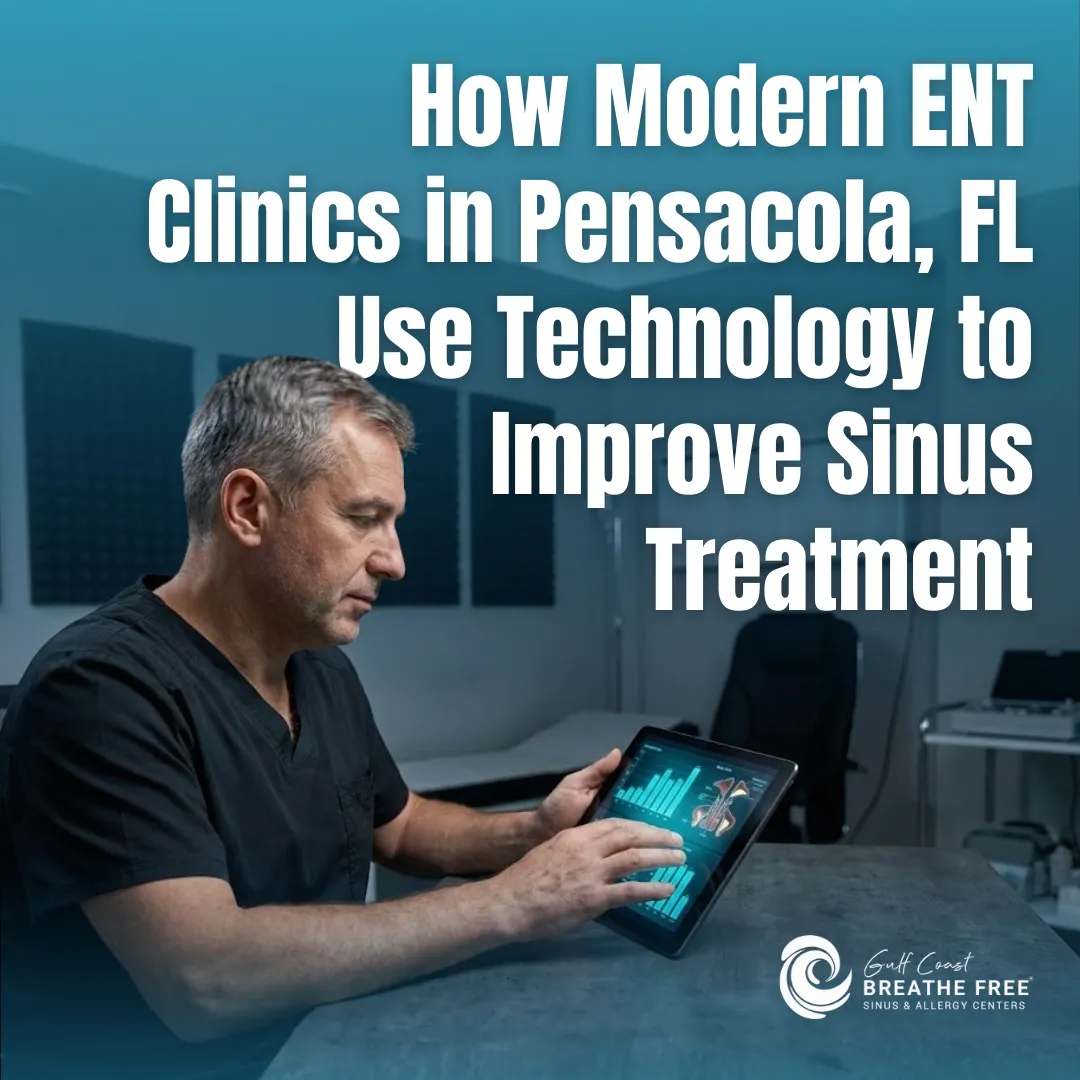
Why ENT Technologies Matter in Diagnosis and Treatment
Modern ENT technologies and developments offer numerous benefits both to the patients and care providers in the field of ENT medicine. Such benefits include:
✔️Diagnosis precision and accuracy: The recent development in modern ENT diagnostic tools allows for more precise and accurate testing and diagnosis of several ENT diseases and conditions. This allows ENT professionals to determine potential contributing factors to persistent symptoms.
✔️Enhanced individualized treatment and management plans: A more precise and accurate diagnosis gives ENT healthcare professionals more insights into the specifics of the patient’s condition, including their findings, medical history, and personal health goals. This can allow them to create and provide individualized treatment and management plans that are more closely tailored to patient-specific needs.
✔️The rise of minimally invasive ENT procedures: The development of several ENT technologies opens doors for the development and use of more minimally invasive ENT treatment and procedures. These may offer benefits such as enhanced patient comfort and shorter recovery times in appropriate patients. However, results vary based on several personal health factors.
Modern ENT Technologies That Can Improve Sinus Care and Treatment in Pensacola, FL
#1: High-resolution and 3D sinus imaging
ENT medicine has increasingly started using high-resolution and 3D sinus imaging techniques, allowing enhanced sinus imaging, surgery planning, and execution.
High-resolution and 3D imaging allows ENT doctors to use clear and detailed images showing the complex structures of the sinuses that may help in more precise diagnosis and treatment planning in appropriate cases.
#2: Minimally invasive sinus treatments and procedures
The rise and development of modern ENT technologies have opened doors for the development and use of several minimally invasive treatments and procedures, including:
- Balloon sinuplasty
Balloon sinuplasty is a minimally invasive procedure that may widen the sinus opening and promote proper mucus flow and drainage, addressing persistent nasal congestion.
The procedure uses a small balloon catheter that is inserted into the affected sinus cavity. Then, the balloon is gently inflated to open the sinus openings. The balloon is then deflated and gently removed.
It’s an outpatient procedure and is considered a less invasive alternative to traditional sinus surgery in select patients. While it may offer benefits like a shorter recovery time, it may also carry potential side effects and risks, such as bleeding, infection, or symptom recurrence. Individual results vary, and your ENT care provider will determine if this is the appropriate treatment for your condition.
- Endoscopic sinus surgery (ESS)
Endoscopic sinus surgery (ESS) is a minimally invasive procedure that may help address nasal obstructions and issues due to anatomical issues like nasal polyps or a deviated septum.
The procedure uses a small instrument with a light and a camera on one end, called an endoscope. The endoscope is inserted into the sinuses, providing a clear and precise visual of the sinus structure. It may improve mucus flow and drainage in select patients.
ESS requires a skilled ENT surgeon to navigate the complex structure of the sinuses and minimize potential surgical risks. Individual results vary, and outcomes are not guaranteed.
- Laser therapies
In select patient cases, laser therapies may be used to remove nasal polyps, which are excess nasal tissue that may cause persistent nasal obstruction and breathing difficulties. It’s a minimally invasive treatment option that can minimize potential side effects like swelling and bleeding in the treatment area.
However, laser therapies are not yet universally adopted and may not be suitable for all patients. Consulting with your ENT care provider can help determine if this is the appropriate treatment for your condition.
- Radiofrequency ablation
Radiofrequency uses radiofrequency that may shrink swollen nasal tissues, which may be contributing to persistent sinus issues in some patients. Many patients report tolerating this procedure well; however, experiences and outcomes vary based on individual health factors. There are also potential side effects, including temporary dryness, bleeding, and discomfort in the treatment area.
#3: Image-guided sinus surgery
The development of image-guided ENT surgery provides ENT surgeons with real-time surgical navigation using highly detailed images of the patient’s sinus structure. Many ENT surgeons use this technology to guide them through surgery, avoid nearby anatomical structures, and reduce potential surgical risks and complications.
#4: Targeted drug delivery systems
New targeted delivery systems allow a more convenient and efficient use of traditional ENT medications. These new developments are designed to release medication directly into the affected sinus cavity, addressing the symptoms.
Some post-operative cases may involve the use of FDA-approved biodegradable stents for certain post-operative indications, as part of a physician-directed treatment plan. A consultation with your ENT care provider can help determine if this is the right approach for you.
#5: Telemedicine and remote patient monitoring
The global pandemic has seen a rise in the demand for telemedicine and remote patient monitoring. Even as things settled down and all sectors have returned to normal pre-pandemic operations, they remain in demand for remote patient-provider communications and consultations.
This technology allows healthcare providers to review patient data, monitor symptoms, and track patient response to treatments all remotely, often via video calls.
Frequently Asked Questions From Sinusitis Patients in Pensacola, FL
What is sinusitis?
Sinusitis is the inflammation of the sinuses, the hollow, air-filled spaces located behind the cheeks, forehead, and nose. During normal sinus function, they naturally produce and drain mucus, which humidifies and filters the air we breathe. However, the sinuses sometimes become irritated and swollen due to a variety of factors, like allergies, bacterial infections, or viral infections.
What are the common symptoms of sinusitis to look out for?
Symptoms present during a sinus infection vary per patient, but common signs to look out for include:
- Persistent nasal congestion
- Facial pain and pressure, particularly around the nose, cheeks, eyes, and forehead
- Postnasal drip (mucus dripping down the back of the throat)
- Runny nose with thick yellow or green discharge
- Ear pain and/or tooth pain
- Headache
- Coughing
- Fever
- Fatigue
- Halitosis (chronic bad breath)
ENT Sinus Specialist Near Me in Pensacola, FL
If you’re comparing ENT care options in Pensacola, FL, Gulf Coast Breathe Free, one of the many ENT care providers in the area, is happy to answer any questions. Learn more about our ENT services or contact us directly for more information.