


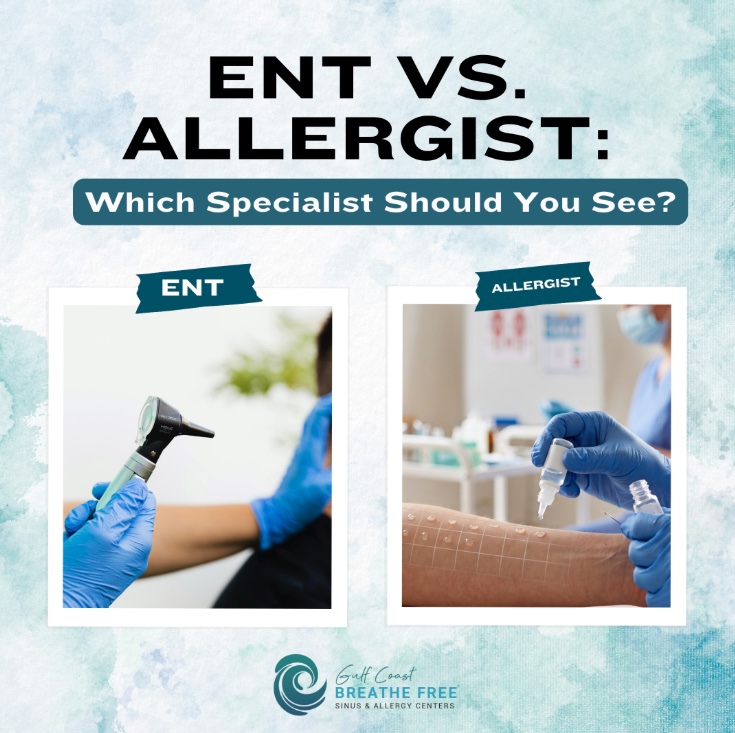
ENT vs. Allergist: Which Specialist Should You See?
Living along the Gulf Coast has its advantages—mild winters, beautiful beaches, and plenty of opportunities to spend time outdoors. It also means living with environmental conditions that can keep allergy and sinus symptoms active for much of the year. If you're dealing with ongoing congestion, facial pressure, sneezing, or recurring sinus infections, you may be wondering whether you should see an allergist or an ear, nose, and throat (ENT) specialist.
At Gulf Coast Breathe Free Sinus & Allergy Centers, we often meet patients who have spent months trying to figure out which provider is the right choice. The reality is that allergies and sinus conditions frequently overlap, making an accurate diagnosis more important than the symptoms alone.
What Does an ENT Treat?
An ear, nose, and throat (ENT) physician, also known as an otolaryngologist, diagnoses and treats conditions affecting the ears, nose, sinuses, throat, and related structures of the head and neck. ENTs commonly evaluate a wide range of conditions, including:
- Chronic sinusitis
- Recurrent sinus infections
- Nasal obstruction
- Deviated septum
- Nasal polyps
- Ear infections and hearing concerns
- Hoarseness and voice disorders
- Snoring and certain sleep-related breathing conditions
Rather than treating congestion as an isolated symptom, an ENT evaluates how inflammation, sinus drainage, nasal anatomy, and airflow work together to identify what's causing your symptoms.
What Does an Allergist Treat?
An allergist focuses on conditions caused by the immune system's response to allergens.
These conditions include:
- Seasonal allergies
- Year-round environmental allergies
- Asthma
- Eczema
- Certain food and medication allergies
Through allergy testing, an allergist identifies environmental triggers such as pollen, mold, dust mites, and pet dander. Identifying potential triggers can help guide an individualized allergy-management plan and strategies intended to minimize exposure and symptoms.
Why Allergies and Sinus Conditions Often Overlap
Many patients are surprised to learn that allergies and sinus disease can produce nearly identical symptoms.
Both conditions can cause:
- Nasal congestion
- Postnasal drip
- Facial pressure
- Headaches
- A reduced sense of smell
- Difficulty breathing through the nose
Allergic reactions can cause inflammation of the tissues inside the nose. In some people, this swelling may narrow sinus drainage pathways and interfere with normal mucus flow.
Over time, persistent inflammation may contribute to recurring sinus infections or chronic sinusitis, making it difficult to tell where allergies end and sinus disease begins.
Gulf Coast Weather Can Make Symptoms Last Longer
The Gulf Coast's warm, humid climate creates an environment where allergy symptoms may persist throughout much of the year.
Tree pollen, grasses, weeds, mold, and humid conditions may contribute to allergy and nasal symptoms for some people. Frequent rain and moisture encourage mold growth, while coastal breezes can carry pollen and other airborne allergens across the region.
Because environmental triggers change with the seasons but rarely disappear entirely, many residents experience congestion that seems to come and go without ever fully resolving.
Someone who assumes they're dealing with "just allergies" may actually have chronic sinus inflammation or another ENT condition that deserves further evaluation.
How ENT Specialists Help Identify the Underlying Cause
An ENT evaluation can help identify potential factors contributing to persistent symptoms rather than simply addressing the symptoms themselves.
Your provider will discuss when your symptoms occur, whether they change throughout the year, how they affect your sleep and daily routine, and whether you've experienced recurring sinus infections, facial pressure, or changes in your sense of smell.
Depending on your symptoms and clinical history, your evaluation may include or lead to recommendations for nasal endoscopy, allergy testing, or imaging when clinically appropriate. This evaluation can help your provider develop treatment recommendations based on the factors contributing to your symptoms.
How Do I Know It's Time to Stop Waiting and Get Checked?
Seasonal allergies are common along the Gulf Coast, but symptoms that continue returning shouldn't simply be accepted as part of everyday life.
An ENT evaluation may be appropriate if:
- Congestion lasts for several weeks.
- Symptoms return during multiple seasons.
- You experience recurring sinus infections.
- Facial pressure becomes a regular problem.
- Nasal blockage interferes with sleep.
- You're unsure whether allergies or another ENT condition is responsible.
An evaluation doesn't necessarily mean you'll need a procedure. An evaluation can help identify potential causes of your symptoms and determine what treatment options may be appropriate.
The Right Specialist Starts with the Right Diagnosis
Choosing between an ENT and an allergist isn't always about selecting one over the other. Many patients experience symptoms influenced by both allergies and sinus disease, making an accurate diagnosis the most important first step. Based on the findings of your evaluation, your care team can recommend treatment options that may fit your individual needs.
At Gulf Coast Breathe Free Sinus & Allergy Centers, we help patients throughout the Gulf Coast region better understand persistent sinus, allergy, and ear, nose, and throat concerns through personalized evaluations and compassionate care. Schedule a consultation with us today to discuss your symptoms, potential contributing factors, and treatment options that may be appropriate for you.